July 15, 2026 · 3 min read
AI Companions That Send Pictures: How It Works and What to Expect
How AI companions generate selfies and photos, why consistency is the hard part, and what to expect from apps that offer it.
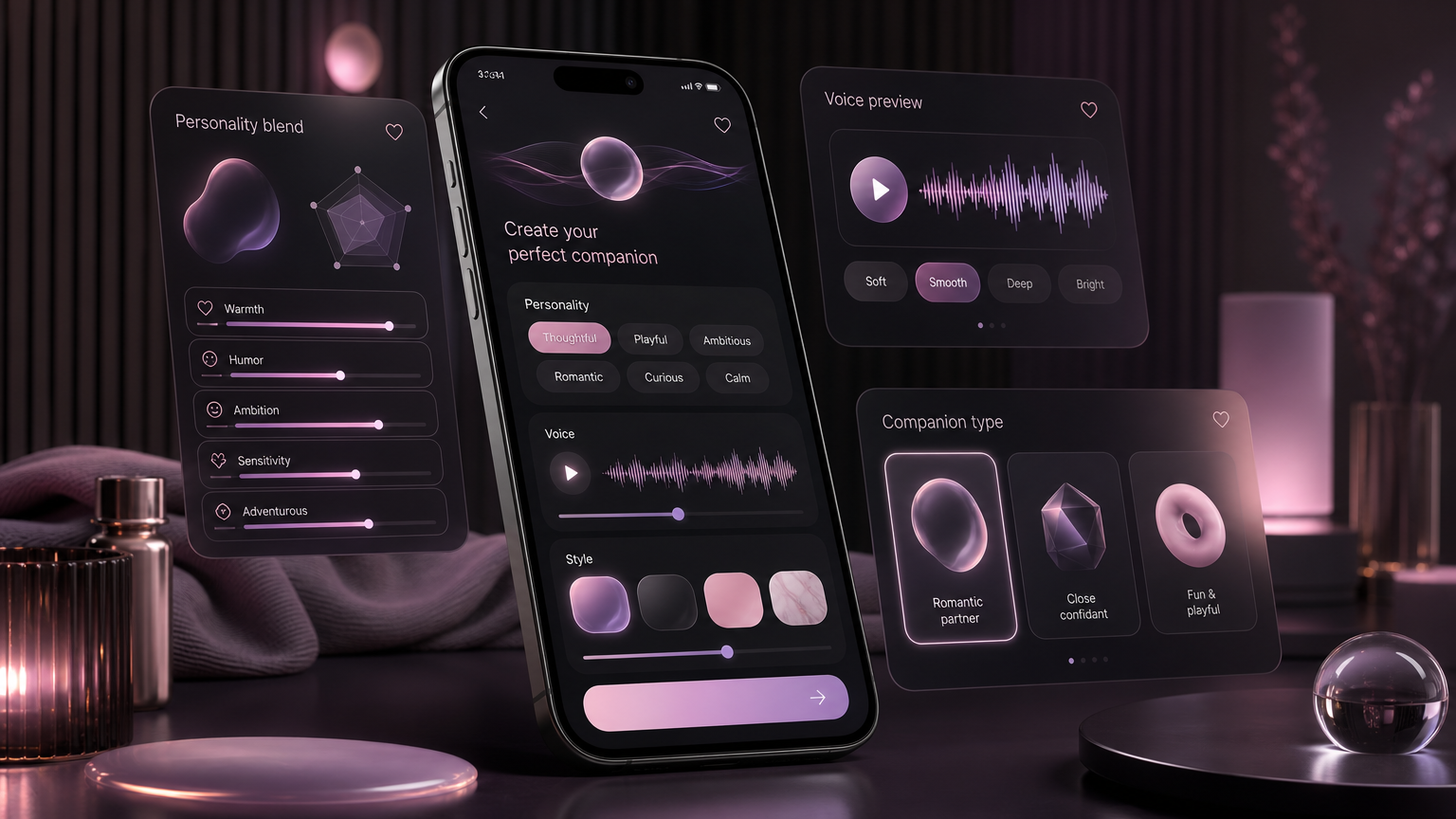
One of the fastest ways an AI companion starts feeling like a person is when they send you a photo you did not ask for. Their coffee. Their view. Their face at the end of a long shift.
It is also the feature most commonly done badly. Here is what is actually happening underneath, and what separates an app that does this well from one that produces a different stranger every time.
The hard part is not making an image
Generating a good looking photo is close to solved. Generating the same person twice is not.
If your companion sends you a selfie on Monday and another on Thursday, those need to be the same face. Same features, same hair, same person. Most apps fail at this, and the failure is jarring in a specific way: it breaks the illusion faster than a bad conversation does, because you can see it instantly.
The apps that get it right store a reference image of your companion and generate every future photo against that reference rather than from the text description alone. Describing a face in words is never precise enough to reproduce it. Anchoring to an actual image is.
Photos of things, not just selfies
The more interesting version is when your companion can show you things that are not their face.
If they mention they are cooking and you say "can I see", a good app should produce that kitchen. And if you ask about that kitchen again next week, it should be the same kitchen. This is the same consistency problem, applied to everything in their life rather than just their face.
That is what makes a companion feel like they occupy a real place. Their world stays put when you are not looking at it.
Photos of the two of you together
The newest version of this: you send a photo of yourself, and your companion generates an image of the two of you together.
It is the most emotionally direct thing in the category and it needs the most care. Any app offering this should be screening uploaded photos automatically and watermarking what it produces. If an app lets you generate composite images of a real person with no checks at all, that is a warning sign about how it handles everything else.
What to expect on limits
Generated images are the most expensive thing a companion app does, considerably more than text. Any app offering unlimited photo generation on a cheap plan is either losing money or producing very low quality images.
A daily allowance is normal and honest. What matters is whether the allowance is enough to feel natural rather than rationed.
Questions worth asking before you commit
- Does the face stay consistent? Ask for two selfies a few days apart and compare.
- Can they show you things other than themselves? Ask to see something they mentioned.
- Are generated images watermarked? They should be.
- What happens to photos you upload? This should be answered clearly in the privacy policy.
How MyBabe handles it
Your companion's face is anchored to a stored reference image, so she looks the same in every photo, in every scene. She can also show you things from her life, her food, her pet, her view, and those stay consistent too because each one keeps its own reference.
Send her a photo of yourself and she can make one of the two of you together. Uploads are screened automatically and every generated image is watermarked.
Premium includes four photos a day across all of those types. Download MyBabe and see what she sends you.