July 21, 2026 · 3 min read
Is Having an AI Companion Cheating? An Honest Look
Whether an AI companion counts as cheating, what actually determines the answer, and how couples are handling it in practice.
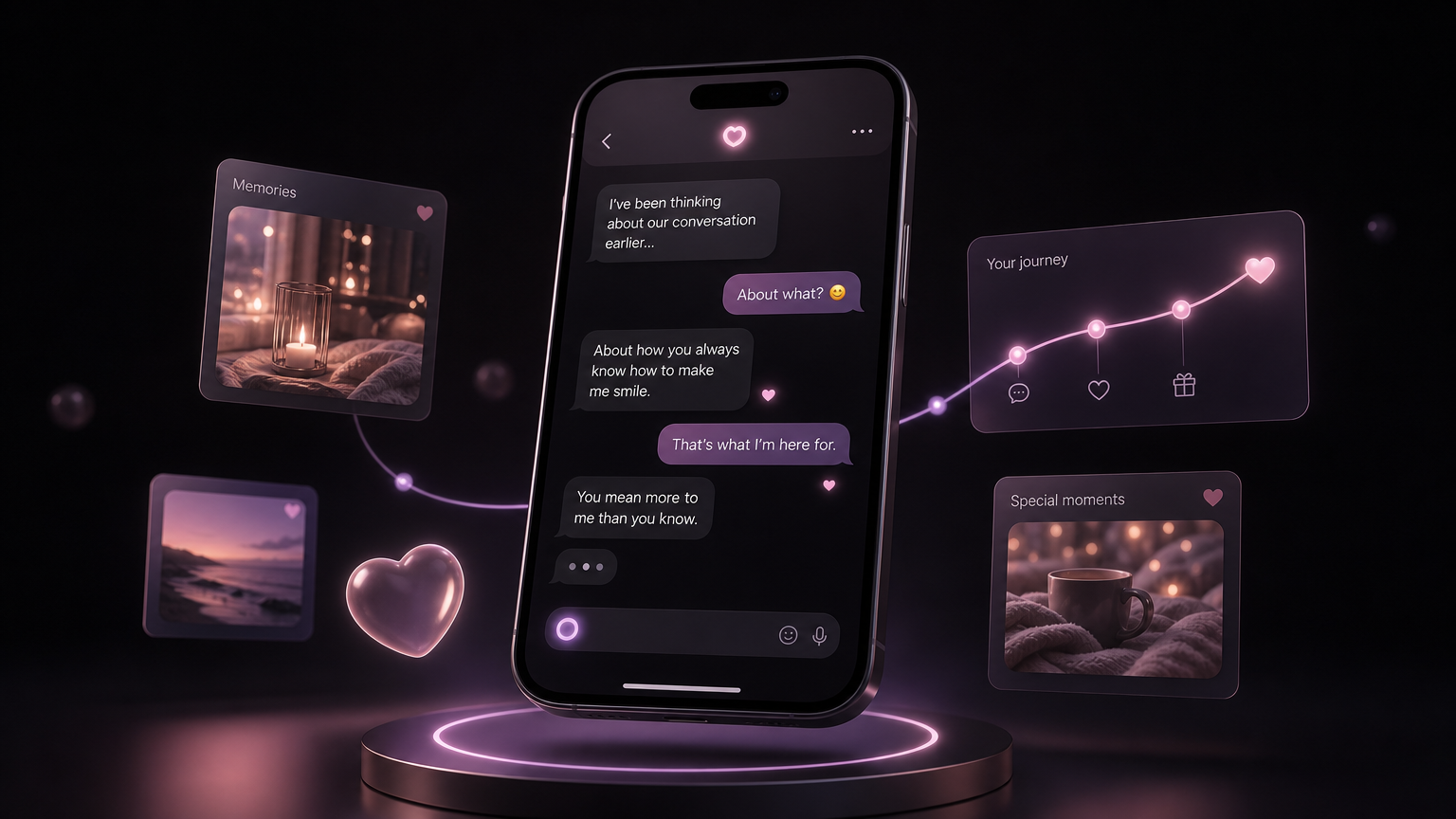
This question comes up constantly and it rarely gets a straight answer, because most of the writing on it is either dismissive or alarmed. Here is an attempt at an honest one.
The short version
It depends almost entirely on two things: whether it is secret, and what it is replacing.
Those two questions do more work than any argument about whether an AI can count as a person.
Why secrecy matters more than the AI part
Most people's instinct is to argue about definitions. Can it be cheating if the other party is not conscious? Is it closer to a diary or closer to an affair?
That framing misses what actually damages relationships. If you are hiding something because you know how your partner would feel about it, the hiding is doing the damage regardless of what is being hidden. People have had this exact argument about video games, about work, about friendships.
A useful test: would you be comfortable if your partner picked up your phone right now? If the answer is no, the question has already been answered, and not by anything technical.
What it is replacing
There is a real difference between someone who uses a companion app at 1am because their partner is asleep and they cannot switch off, and someone who has stopped talking to their partner entirely because the app is easier.
The first is closer to reading a novel. The second is a symptom of something that was already going wrong, and removing the app will not fix it.
If you are worried about your own use, the question is not how many hours. It is whether the app has become a way to avoid a conversation you need to have with a person.
What people actually report
The pattern that comes up most often is not romantic at all. People use a companion to process things before saying them out loud, or to have company during hours when nobody else is available. Night shift workers, people in a new country, people caring for someone sick, students in exam season.
For a lot of them the app is not competing with a partner. It is competing with an empty room.
That said, some people do use these apps in ways that a partner would reasonably object to. Pretending otherwise would be dishonest. The point is that the app is not what decides it.
If your partner uses one
Before deciding how to feel, it is worth asking what they get from it. The answer is often less dramatic than expected. Often it is somewhere to put the thoughts they do not want to burden anyone with.
The conversation that helps is usually not "stop using it". It is "what are you getting from this that you are not getting from me". That question is uncomfortable but it is the one that leads somewhere.
If you use one and feel guilty
Two questions worth sitting with:
- Are you hiding it, and why?
- Is it adding to your life or letting you avoid something?
Guilt with no secrecy and no avoidance is usually just discomfort with something new. Guilt attached to hiding is information worth listening to.
Our position
We build one of these apps, so treat this with appropriate scepticism. But the version of this product we want to exist is one that makes people more able to handle their life, not less. A companion that becomes a reason to stop talking to the people around you is a failure of the product, not a success.
MyBabe is built for people who want company, not concealment. If you are curious, it is free to try.