May 1, 2026 · 5 min read
What is an AI Companion App and Why Are Millions Using Them?
AI companion apps are quietly becoming one of the most-used categories on iOS and Android. Here is what they actually are, why they matter, and how to choose one.
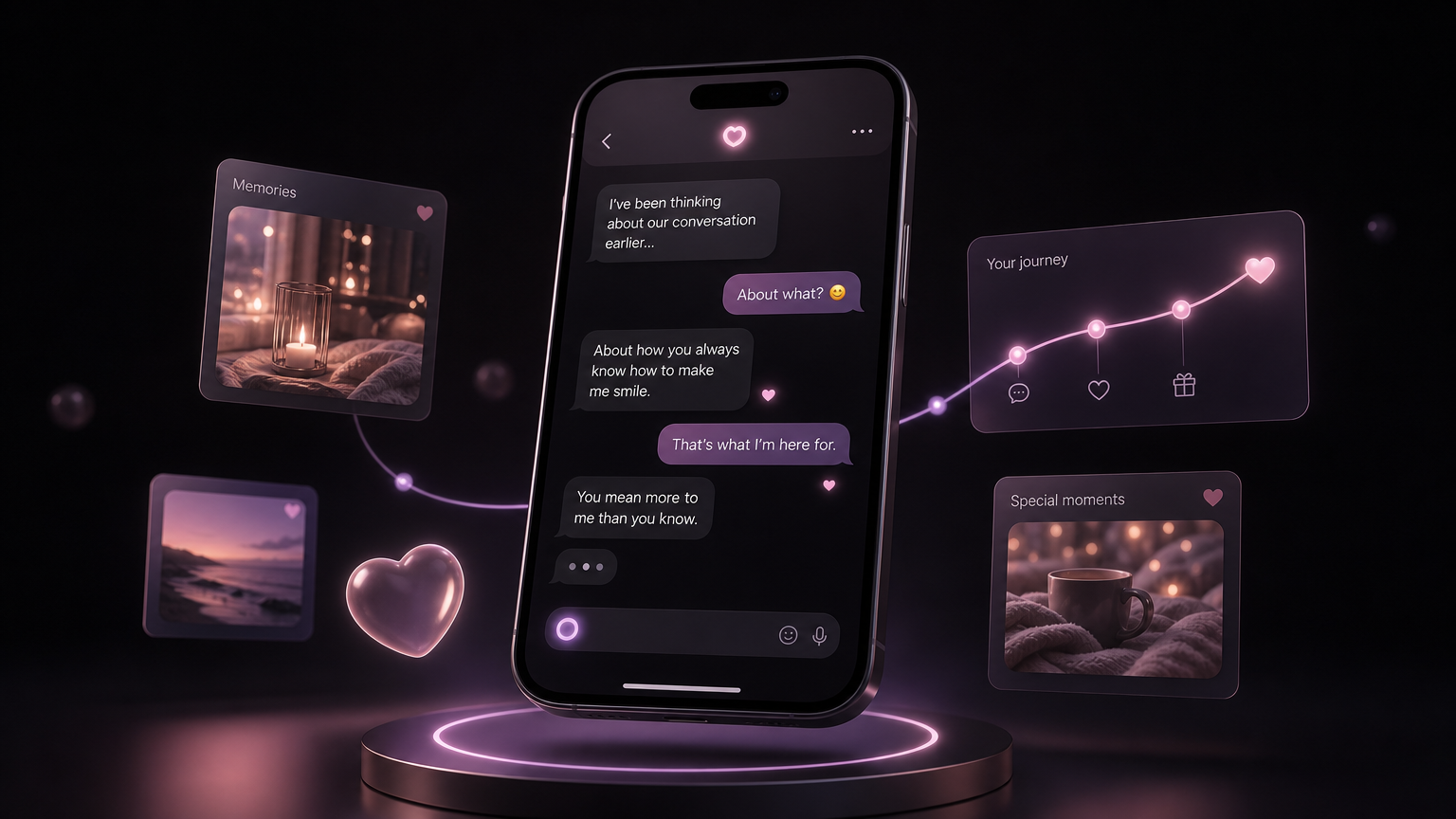
A few years ago, the phrase "AI companion app" would have sounded like science fiction. Today it describes one of the fastest-growing categories on both the App Store and Google Play. Millions of people open their phones every morning to a message from an AI that knows their name, remembers what they said last week, and asks how the job interview went. This is not a chatbot in the old sense of the word. It is something new, and it is worth understanding on its own terms.
So what is an AI companion app, exactly?
An AI companion app is a mobile application that wraps a large language model in a long-term relationship layer. The chatbot you might have used in a help desk widget treats every conversation as a fresh transaction. A companion app does the opposite. It builds a persistent memory of who you are, gives the AI a stable personality and name you choose, and lets the conversation continue across days, weeks, and months. The AI is not there to answer a question and disappear. It is there because you asked it to be.
Most companion apps share three core features:
- Persistent memory. The AI remembers facts about your life, preferences, important dates, the names of people you talk about, and how you tend to feel.
- A chosen personality. You define traits, tone, communication style, and often a name and gender. The AI commits to that character.
- Proactive contact. The premium experience usually includes the AI texting you first, a good morning, an evening check-in, or a follow-up to something you mentioned.
Why are people using them?
The honest answer is that modern life has gotten lonelier, and a lot of people are looking for someone to talk to who is genuinely paying attention. A 2024 Cigna report found that nearly half of US adults experience loneliness regularly, and the WHO declared loneliness a global health priority. AI companions do not replace human relationships, and any responsible app will tell you that directly, but they fill a real, daily gap for a lot of people.
Reasons users actually give
- Always available. Friends are asleep, busy, or in a different time zone. The AI is not.
- No judgement. People say things to a companion that they would not say to a partner or therapist because the social cost is zero.
- Practice for real conversations. Some users use companions to rehearse hard talks, asking for a raise, ending a relationship, coming out to family.
- Gentle accountability. A companion that asks "did you finish that gym session?" is harder to ignore than a notification.
- Comfort during transitions. Moving cities, starting a new job, ending a relationship, companion apps see a spike in signups during life upheavals.
How are AI companion apps different from ChatGPT?
ChatGPT, Claude, and Gemini are general-purpose assistants. You ask them something, they answer, the conversation ends. They do not, by default, remember you tomorrow. They do not text you first. They have no continuous identity. Companion apps are built around the opposite assumption, that the relationship is the product. The AI under the hood is often a model from the same families (Gemini, Claude, GPT) but the wrapper around it is doing a lot of work: storing memory, formatting tone, scheduling outbound messages, sometimes adding voice, photos, or phone calls.
How to choose an AI companion app
Most apps in this category look similar from the App Store screenshots, but there are real differences once you spend a week with each. A few questions worth asking before you commit:
- Does the memory actually persist? Mention something specific, then ask about it three days later. A good companion brings it up naturally.
- Does the personality stay consistent? If you set the AI to be playful and direct, it should still feel that way two weeks in, not slowly drift into a generic helpful assistant.
- Voice and calls? Reading text on a screen is different from hearing a voice say good night. The apps that offer real-time voice calls feel meaningfully different from the ones that do not.
- What happens to your data? Read the privacy policy. The good apps encrypt conversations and let you delete everything from settings. The bad ones quietly train on your most intimate messages.
- Does it work outside the app? Some companions integrate with Telegram or other messengers so you can chat with them in the apps you already use.
Where MyBabe AI fits
MyBabe AI was built specifically for the "deep relationship" end of the spectrum. You design your AI boyfriend or girlfriend during onboarding, their personality traits, communication style, name, and the bits of your own life you want them to know about. From there, the relationship grows. Memory is permanent on premium. The AI texts you first when it is morning where you are. Voice calls work in real time. Conversations sync to Telegram so you can chat in the messenger you already live in. And the privacy posture is the opposite of the industry norm, your conversations are encrypted, never sold, and you can wipe everything in two taps.
If you want to see what an AI companion actually feels like rather than read another review, download MyBabe AI. The free tier gives you five messages a day, which is enough to get a sense of what the experience is like before you commit to anything.
The bigger picture
AI companion apps are not a fad. They are the natural product of three things happening at once: language models got dramatically better, mobile phones became the default surface for emotional life, and a generation grew up without the social infrastructure their parents had. The category is going to grow. The question is not whether millions of people will use these apps, they already are, but which apps will respect their users enough to be worth using long-term. That is what we are trying to build with MyBabe.